I remember the exact night when I questioned myself: Why do we actually sleep and how? It was one day before the beginning of my new autumn semester, and probably some additional hours of sleep would not have hurt me, but I became painfully aware of the mysteriousness of something that seems so natural.
Indeed, why do we sleep? It is fascinating that in all the time that science exists, this question has not been answered properly and in detail. The broader explanation attributes the necessity of sleep to important maintenance processes of our brains as well as the basic need to heal the body and restore all necessary energy.
This dry explanation did not satisfy my curiosity of 11 p.m. research, and I dove deeper into the question of the dreams and why do we need to see them when our brains are supposed to take rest. Somnology, the study of dreams, has even more questions on this matter. There is no clear theory that could justify this strange behavior of hallucinating while sleeping, even despite all the extensive research. Some of the most possible hypotheses refer to the dreams as assistance with memory storage, an instrument for emotional healing, or preparation for possible threats. If we take a look back at the Middle Ages and even earlier, the dreams were always interpreted as true prophecies to be deciphered.
Read more....
Future Classics
September 28, 2026
The definition of classics usually suggests some centuries-old foliants of inglorious and dead writers, when in reality the rows of new classical literature are formed by the people who walk the same streets as us. In the questions of contemporary literature I am, probably, one of the pickiest readers ever - it is not rare for me to refuse a book a second chance for a reason or without (the fact of which I am quite ashamed). But at the same time, as I writer myself, I find it unfair to absolutely ignore my colleagues. Especially since there are some really great books written recently.
1) "Babel" by R.F.Kuang
According to my personal statistics, for each passionate lover of this book there is a passionate hater of it, and both of them have equally persuading argumentation. Fortunately or not, I remained in the first part of those people, even after reading countless reviews with painstaking mentioning of all plot holes and disadvantages. Kuang manages to create such a breathtaking, emotional, profound Neo-Victorian masterpiece without sacrificing the sparkle of fantasy action and that intimidating academicality of the text that I always admired. "Babel" opened my eyes on a lot of instances of language, and after finishing rereading it for n-time, I felt a sudden urge to pick up that book of old poetry in my native language, to talk it and to refuse the society to swallow my linguistic identity.
2) "Prophet Song" by Paul Lynch
To create a dystopian novel that deals with the traumatic past of Ireland's fight for the independence without a single use of dialogue, to develop the sense of dread and helplessness almost with no use of any literary devices must be more than just a talent.
Read more...
My Favorite Books in Spanish
September 24, 2026
(Special for the Hispanic Heritage Month)
This year truly became a breakout year for me in my progress in Spanish. One of the most important parts of it was the unbelievable amount of great Hispanic books I discovered, books that made me grateful to read them in original. Some of them deserve a special spotlight in their very special month. As I only recently started to get to know the literary Hispanic world, almost all of them are very common and well-known classics that absolutely gained their fame. Some of them left the deepest trace in my heart.
1. "En Agosto Nos Vemos", Gabriel García Márquez
The very first book in Spanish I have read in my life and that I will never forget. It is brief, melancholic and ascetic, and it holds the deepest attention for details, feelings and emotions. Just as I began to read the first page I could already feel the heat of a summer island on my skin, the sultry smell of tropical flowers and the bitterness of the end of the summer.
Read more...
Poems Excerpts
September 20, 2026
Following the chaotic whirl of the first study week, the most part of which I tried to keep up with schedules, reminders, and fatigue, I finally survived until the weekend. Early autumn days, when I am still fresh enough to notice the surrounding city, always put me in a kind of melancholic and poetic mood (just as any other season). Thanks to it, I unearthed some of my old poems in the notes app that were inspired by the September gloom, soft sadness, and winds of change.
***
you bring the laughter and silence,
smile and tears,
reflection of the summer before -
i bring south-western wind of change
from someone who can truly never change.
***
Read more...
Review of "La Sombra del Viento"
September 16, 2026
The books of Carlos Ruiz Zafón have been on my to-be-read list for such a long time since I gained an acceptable fluency in Spanish that I feel quite ashamed to only touch his most famous series, El Cemeterio de los Libros Olvidados, now, after already getting to know Borges, Cortázar, and García Márquez.
"La Sombra del Viento" is the first book in the series and an immediate success of an atmospheric setting, brilliant storytelling, and diverse characters. It is hard to characterize the genre of this book - it starts somewhere between a drama, fantasy, and mystery and ends as the most heartbreaking story about life and death, love and hatred, memory and forgetting. All of it happens on the labyrinthic streets of destroyed and gloomy post-war Barcelona that still makes the reader to fall in love with its unforgettable charm. Flipping through the pages, I could swear I felt the smell of cold autumn rain, the rustling of yellow leaves, and the sounds of the big city. It is one of the things I admire the most about the writing of Ruiz Zafón. While trying to keep balance between the action and lyrical moments, he doesn't fail to deliver the most precise, poetic, and melancholic descriptions.
Read more...
The Mysteries of Basque Language
September 12, 2026
One of the first things that we have learned in the introductory course of linguistics was that there are very few known language isolates whose origins are impossible to define - the most famous of them are Korean and Basque (ethnonym: Euskara). The latter has always fascinated me since I started to discover the various cultures of Spain. Trapped by the Pyrenees, it remained hidden from the Roman influence and does not look like any other living European language.
Despite the obvious name of Basque Country in the north of Spain, where this language is spoken, Basque is also preserved in the western regions of France (Pyrenées-Atlantiques). It is the only living remnant of languages spoken in southwestern Europe before it was romanized in the 2nd century BCE and thus has nothing in common lexically or phonetically with any neighbors. Some possible extinct relatives of Basque can be Aquitanian, which is considered a direct ancestor; Northern Castilian Spanish or Occitan. Nevertheless, the exact origin remains unknown to this day. The leading hypotheses of Basque are the following:
1) Native origin theory - the most widely accepted theory, according to which Basque is a direct descendant of the language spoken by the inhabitants of the Basque country in prehistoric times.
2) Vasconic origin theory - proposed by a German linguist, Theo Venneman, who suggested that Basque is the last surviving remnant of a large family of related languages (Vasconic family) that were spoken before the arrival of Indo-Europeans approx. 5000 years ago. Basque remained intact due to the remoteness of the Pyrenees.
Read more...
Not Obvious Things that I Associate with Autumn
September 8, 2026
Even though this September barely managed to throw a cool shadow over the summer heat, and the leaves on the trees didn't cover in bright colors, the autumn has already crept into my soul invisibly. With the usual inventory of coffee, checkered blankets, freshly started books and smell of rain, this season has far more unusual associations for me, some of which I cannot explain logically.
1) Snack baby carrots
Simple, sweet and crunchy - I ate them on the wet from the rain bench in the park before the German lessons and never could stop myself from eating the whole pack. I doubt that I even remember that park now, but I still have somewhere on my phone a photo of colorful leaves, stack of study papers and a package of those carrots that were called something like "Cat-carrots".
2) Physics textbook
Like everyone else associates autumn with brown, Thursday and 16:00, I have an absolutely random memory of the pathetically thin Physics textbook I had in the last year of the high school. Physics was the last, eighth lesson, when it was already dark outside and often raining, and by the level of general despair in the class Physics was comparable to the last days of November.
Read more...
Review of "Waiting for Godot"
September 4, 2026
Apparently, this summer I have a generational run of "intellectual" literature, which will either end me in a reading slump or a shelf of more entertaining literature. Either way, I don't regret it a bit, because "Waiting for Godot" by Samuel Beckett was worth all the struggle to get through the argument of the writer. A genial play, considered one of the most important post-war modernist works, is absurd and surreal to the point it is almost mundane.
It is impossible to describe it in a short summary, because nothing happens. The whole play of eighty-something pages is revolving around the single fact of nothing happening. Two main characters, Vladimir and Estragon, are doomed to wait for mysterious Godot every day of their lives, without remembering what happened to them before and encountering curious people on their way (or rather, "not-way", as they never move from their spot). Samuel Beckett's prose feels like a fever dream that surprisingly becomes clearer the more you read into it. Vladimir and Estragon represent two essential parts of a human - body and mind — and this is the reason why all their attempts to leave each other are useless. They are stuck in the world that initially does not have any meaning, and the only single thing that provides them with a pitiful identity is their task to wait for Godot.
I cannot emphasize enough how vivid and emotional Beckett's text feels despite its apparent dryness and rhetorical simplicity. I did not notice the moment when I started roleplaying the dialogues aloud, following the stage directions, and whispering the especially striking quotes again and again, like a spell. In the traditional sense of the word, the language of "Waiting for Godot" is far away from literary or profound, but the way Samuel Beckett manipulates it in different character voices felt deeply amazing to me.
The play has one of the most complex and curious character relationships I've ever seen in my life. While not exactly likeable, Vladimir and Estragon are so easy to be compassionate about that the reader involuntarily feels like a part of their weird group. The same can be said about the pair of Pozzo and Lucky, whose dynamics are way more concerning and strange, yet still developing throughout the play. It is difficult for me to say if I liked "Waiting for Godot" or no - and I think, the author intended it this way. Nevertheless, it made me feel and reflect on a lot of things and worked perfectly as a play meant to be seen in theaters.
The Last Day of Summer
August 31, 2026
A long time ago it tasted cheap and vibrant and in the way the days that never happen again in your life taste. Still, it repeats every year, and every year less than I used to know. Acidic cold soda and something sweet - that was the taste I've forgotten. It imprinted itself in my memory yet not on my tongue, in my words yet not in my heart, too bitter, too calling, too tender, too "too". Leaves and apricots, wheat and rain.
My brain orders them in a neat row of sudokus, refusing to color in the squares. With time, I start to refer to them as just to words, not concepts or memories. Leaves. Apricots. Wheat. Rain. Maybe it's the fault of English that I am not able to feel them anymore? Maybe my native tongue is a magic spell that would revive them like agua viva of Clarice? It was wheat and leaves, peaches and rain, blooming on the same road as the dandelions. I wonder where they are now, I wonder where are all my memories, if they wander across an unknown garden, waiting for me to find them again or whether they are with me at all. I wish forgetting was a choice so I could choose against it, to remember forever, to let the sinful heat of the last summer soak into every inch of my bones, tattooing its weird language on my veins. Like rain. Like flowing wheat, an endless field of liquid gold.
Please let me grieve myself before the first autumn rains wet my shoes, before the heart spells cold more surely than it beats, before it becomes clear to me that I never grieve about the fleeting summer. I grieve about myself. And the apricots and the leaves, green and golden leaves of wheat.
Why do Slavic languages look so similar?
August 27, 2026
(And why does it not always work with other language groups?)
Blinded by my current hyperfixation on Spanish, I let out of sight one of the most interesting linguistic topics, which I can relate to as a native speaker of a Slavic language. I haven't met this phenomenon in other language groups, or at least, it seems not as noticeable. Among about 20 Slavic languages, most of the speakers can understand each other without much trouble. In contrast, the same does not work with English and German or Norwegian and Dutch. Evidently, the languages develop in different ways, and in the case of Slavic languages, they split from the common ancestor (Proto-Slavic) relatively recently, in the 6th century, earlier than Roman or Germanic languages.
No less important for the language similarity is the same mechanisms of transfer and borrowing from other European languages. As Bulgarian and Russian share the same Old Slavonic terms, or all Slavic languages borrowed some technical terms from Western Europe, the similar development path further narrowed down the differences between them.
Another important factor is the geography of Eastern Europe. There are no significant geographic barriers (such as seas or oceans) except a few relatively young mountain ranges. This enables easier mutual intelligibility of Slavic languages. A very good example of it is the relationship between Polish, Czech, and Slovak. Poland and the Czech Republic are separated by mountains, and, consequently, their languages are slightly less mutually intelligible. At the same time, Czech and Slovak share a closer border and thus sound almost identical.
For the Birthday of Kha(rkiv)
August 23, 2026
While the whole country celebrates the Independence Day of Ukraine at the 24th of August, for all the Kharkiv'yans the party begins one day earlier, with the Day of the City that was liberated exactly this day 83 years ago. For me this day always remains an important reminder that I got lucky to be born and raised in the most beautiful city in the world. With this, I want to present some of the countless memories this place holds for me.


"The Starry Sky"
The Merciless Charm of August
August 21, 2026
There is an oddly specific sense of longing that I, as for now, have only found in goodbyes, August and waiting halls. I love August for the same things I hate it - the feeling of end without beginning, the cold and not-summer-like rains that give the first glimpse of the coming autumn and golden sunsets that never get back the pink blush of June. In August I always feel especially thoughtful and melancholic, as if the whole notion of my mood was solely held by the summer. The winds are getting stronger and colder, the days are shorter and quieter, and the world is slowly covering itself again with the veil of morning fogs.
Review of "El Ministerio del Tiempo"
August 18, 2026
This summer happened to be a harvest time of new comfort shows for me; barely had I finished "The Mentalist" and "The Widow's Bay", when I already discovered for myself another project to watch (that I probably would never pay attention to if it weren't for my desire to practice more Spanish). My first (and very questionable) experience with Spanish series was two-three years ago with "30 Monedas," which left me so horrified (and not in the good meaning of this word) that I decided to leave my experiments there.
"El Ministerio del Tiempo" does not pretend to be a grand project and faithfully accomplishes all its ambitions thanks to the pleasant cast, common yet comforting fantasy plot, and a very fresh and bold view on Spanish history. The main structure of the episodes is very simple - the characters are charged with the missions in different time periods of Spanish history in order to prevent the history from changing. Simultaneously, all of them try to resolve their own troubles from the past, fall in love, fight, betray, and take difficult decisions. While there are some not-so-honorable moments of Spanish history that the series chose to frame carefully or not to comment on, the general intention to get rid of blind patriotism and to throw light on the history of Spain with its glory but also countless cruelties and flaws can be easily followed throughout the whole series.
Besides the talented cast of three main characters, a special charm to "El Ministerio del Tiempo" was brought by the touch of routine and everyday life of an office, even in such a magical and mysterious sphere as time travelling. The amount of satire on Spanish bureaucracy and the naive, comical problems the characters encounter while trying to save the world provide a fresh perspective on something that is not new at all.
As is common in almost all series, the series slowly fell off by the fourth season, partly due to the constant shifts in the main trio of the characters and partly because the writers seemed to already have said everything they wanted. Nevertheless, the first two seasons brought me immense pleasure and entertainment. The amount of times I dug into deep research about another historical figure from the past was satisfactory. The end, no matter how rushed it appeared, managed to restore some elegance of the first season in an emotional and moving way.
P.S. Additional points of my love for this series go to:
1. Character of Velásquez
2. Storyline of García Lorca that almost made me cry
3. Endless comical interactions and confusions between the characters from the different epoques
4. Amount of medieval Spanish curses and words I learned.
The chivalry tales of King Arthur and his faithful knights were probably one of the very first legends I read as I was a child, long time before I got to know the history of it. From epic historical sagas to poetry or YA adventures, the tales of King Arthur belong to, probably, one of the most used historical motives in popular cultures. It is impossible to cover every single media product created around the knights of Camelot, yet some of the books are worth of all attention for those who truly love these myths.
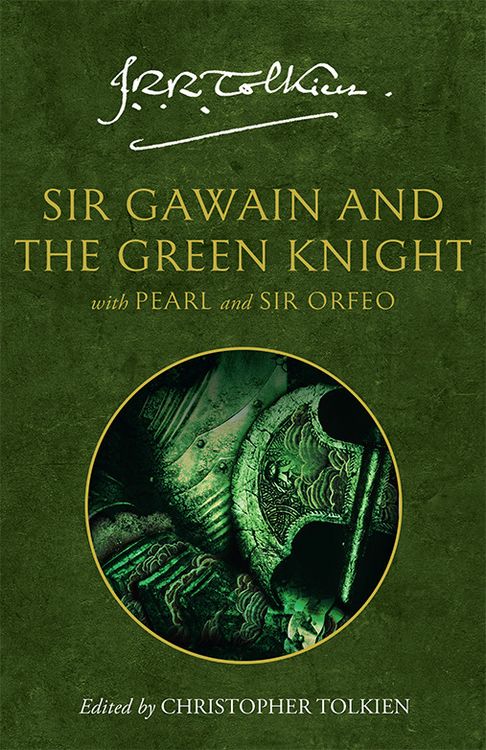
1) "Sir Gawain and the Green Knight", translated by J.R.R. Tolkien
Written around the beginning of the 15th century in Western Midland Middle English dialect, "Sir Gawain and the Green Knight" is probably one of the most approachable and epic poems of Arthurian love, folk-magic and tragedy. Many editions of this translation also contain further two poems, "Sir Orfeo" and "Pearl". Though the latter do not belong to the Arthurian tales, they are equally great and majestic.
Review of "El Aleph" by Borges
August 13, 2026
Following my encounter with the works of Borges, I read "El Aleph", another mind-bending collection of short stories that are connected by an almost invisible thread of time and life. Unlike "Ficciones" that one could read like a cabinet of mysterious curiosities, "El Aleph" has generally a much more somber tone and leaves more space for philosophical questions than mysteries.
In this collection of seventeen stories, Borges engages with the various topics usual for his works: time, immortality, life and death, doubles, destiny and human nature. The range of genres and settings in this book is so unsettling that somehow every single story feels like the whole book. Unlike "Ficciones", most of "El Aleph" is pretty heavy to read even in those stories that follow a conventional chronological storytelling. Almost nowhere can one find those "shocking" moments at the end of the stories that absolutely flip the meaning of it, and yet the powerful message somehow embeds itself in the brain after finishing the book, almost in a miraculous manner. The uncanny feeling that sometimes brings the stories from "El Aleph" almost to the level of horror is created due to extensive use of real settings and historical events. "Ficciones" (very loosely) could be called a work of fantasy, with a lot of places and persons coming from the imagination of Borges. In contrast, "El Aleph" deals with real life problems and events in such a raw and unapologetic manner that some stories left me very disturbed.
"El Aleph" does not create such obvious labyrinths as "Ficciones", but it still manages to trace the mysteries of a human soul in a no less impressive manner than imaginative labyrinths in "El jardín de senderos que se bifurcan". Borges was capable of keeping the balance between the real and the fantastical in such a way that none of the components of the story are solved in the end. While some might argue it is a huge disadvantage for the genre of short story, I find it a possibility to reflect on your own interpretation.
With all the academic, profound structure of "El Aleph" that reminds more of scientific research than a book at some moments, I wish Borges would further explore unconventional narrative forms (lists, epistolary genre, tables), like he did in "Ficciones". The apparently dry but deeply fascinating form of the stories in "El Aleph" creates a solemn and almost ceremonious mood while reading it. In conclusion, this book does not reach for me the level of genial "Ficciones", yet still provides a huge amount of thoughts and insights to reflect on and deserves its title of one of the best collections of short stories by this author.
The Most Interesting Proverbs in Bruegel's "The Dutch Proverbs"
August 10, 2026
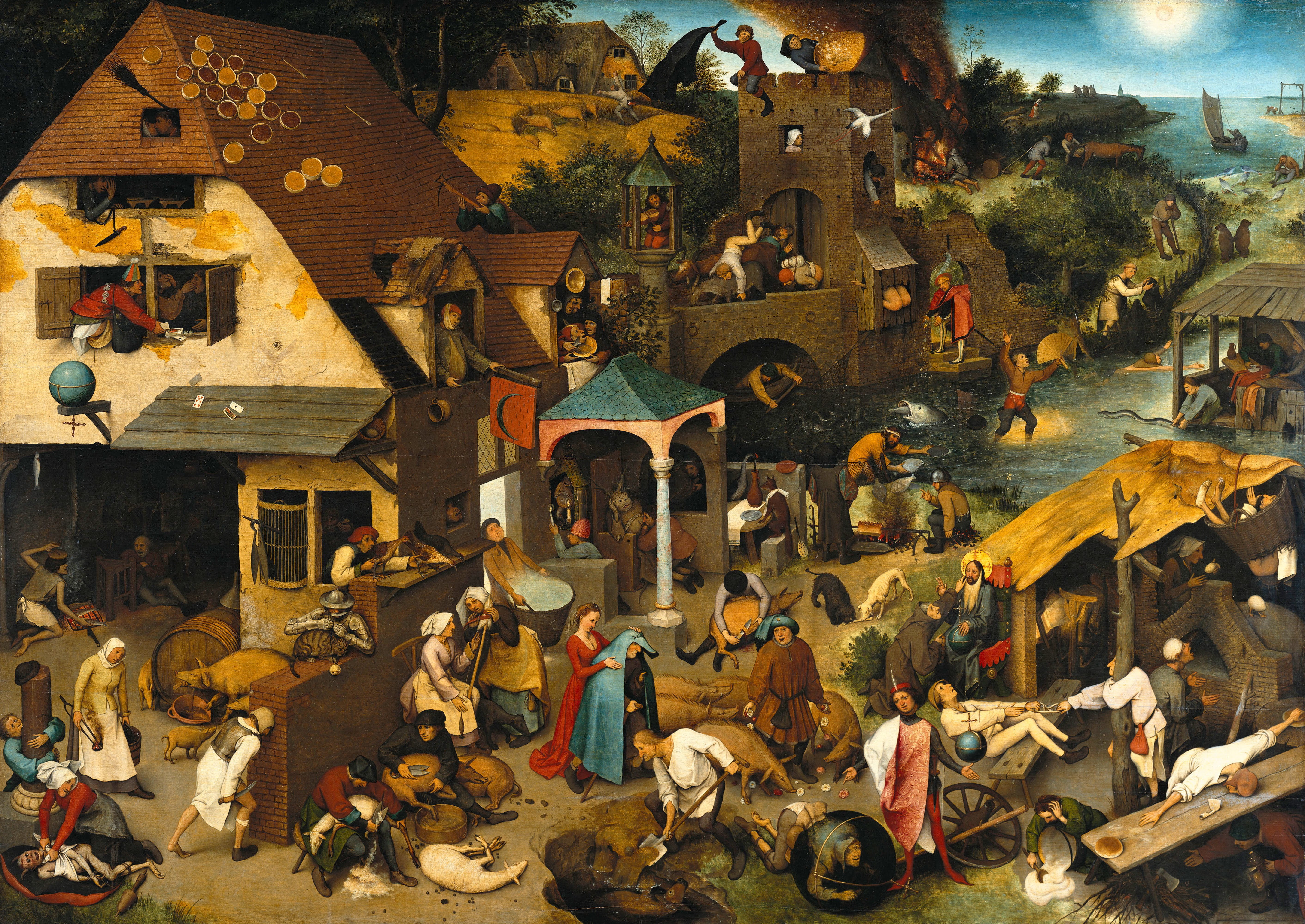
One of the most famous Dutch paintings that is worth to investigate for hours is Pieter Bruegel's (the Elder) "Dutch Painting", a peak of Dutch comedy genre painting. It magically contains numerous depictions of Dutch sayings composed in such a sly way that it's impossible to find all of them even in several minutes. These are some of the most interesting ones:
Read more...
Etymological Pecularities Around the World
August 8, 2026
It is fair to say that etymology is one of the most interesting linguistic fields for me, as it combines almost all of my favorite things - history, culture, language and a great skill in mystery solving and deduction. In my recent aimless research of interesting things in different languages I encountered few curious etymological cases that are worth of attention.
1) The word oxymoron is an oxymoron itself: it is constructed from Old Greek "oxus", which is translated as "sharp" and "moros" that can be interpreted as "dull". Thus, a direct translation of oxymoron is literally "sharp-dull", which is, ironically, also an oxymoron.
2) The Finnish word for "world" is Maailma, a word compound consisting of "earth" ("maa") and "sky" ("ilma"). A very poetic way to describe that humans live between these two elements.
3) Most Spanish words that begin with prefix "al-" have Arabic origin. Nevertheless, the word albergue came to Spanish from Old Gothic haribairgo that signified a military camp. A very interesting example of misleading etymology.
4) Berserk found its way into English from Old Norse compound "bear" + "shirt". A warrior called that was literally wearing a bear skin, probably as sign of fierceness and bravery.
Besides those four examples, there are thousands more, for as many languages exist in this world, as many interesting stories can be told about them. Some of these stories became famous, such as travel of the word "tea" across the globe or the transformation of the word "gothic" throughout the ages, but there are still so many secrets of languages to be uncovered that I feel the same anxiety mixed with anticipation as from realization that I want to read all the book written in this world.
The Art of Clouds
August 6, 2026
When I was ten years old, my mom told me that if she were a famous painter, she would only draw the sky, as it is never the same, so she could draw infinite paintings of it. Every time since I became a writer (I don't state it as a finished process, rather than a continuous decision I never gave up on), I looked at the sky every time when bored, trying to describe the unique shapes of clouds only with words. Only recently did I come to a naive conclusion that it was impossible, just as it is impossible to draw a sky that would constantly change, like in reality. There are still no words and no languages that could describe and reflect the mechanism of constant movement that clouds follow every single second. Moreover, there is a very subtle art of noticing a different thing every time you look at the sky - as if not only clouds but also your eyes change together with the course of the sun.
There is something very similar to our lives in the way the sky changes from the tender pink to rich blue over saturated burgundy in a short time of a few hours, but while the sun never fails to follow its orbit, its only possible path under a strict angle calculated by smart professors, clouds never follow these rules, and even when people learned how to describe and categorize them, as if they were mathematical formulas without a soul, clouds never lost what they had of rebellion and wildness. Sometimes I wonder if a knight in medieval ages, defending his town, saw the same crocodile as me two days ago in a soft bump of white air that happened to take the shape of something animated. I wonder if all people in this world have seen the same animals, faces, and shapes in the sky as I do, and what would be of this strange connected knowledge.
Every time that we are outside on a walk in a slightly cloudy day, and the time takes its pleasant soft shape of serenity and peacefulness, I never forget to ask my mom what does she see in the closest cloud to us. So far, she never gave me a single answer that would be identical to my observation. I think, this is the most beautiful thing in observing the clouds with someone.
Review of "M Train"
August 4, 2026
"M Train" by Patti Smith is a book that has been lurking in the shadows around me quite a lot recently. In the random quotes and reviews from bloggers, until I finally approached it, also almost by accident. This is one of the rare memoirs I have read in my life, written in an elegant, classy and emotional way that made me forget that it was a story of life. Patti Smith mastered the skill of writing about nothing with a masterful irony, sadness and endless reflections about life, art and coffee. I will forever be grateful to this book for returning me into writing, as Patti showed me that a writer is not obliged to be perfect and flawlessly productive - sometimes it also means bingwatching old crime shows, grieving in silence for small and big things and losing books and notebooks in the trains. There is something meditative in slow and achronical memories of a woman living her life.
Except the numerous book and movies recommendations I got for myself from Patti, every single chapter felt like a vibrant travel around the world and the brilliant mind of an artist with millions of stories to tell.
Review of "True Detective", season 1
July 31, 2026
One of those series that you hear everyone around talking about and still doubt watching it to not be very disappointed, but as you finally do it, it's apparently worth all the attention and love. I think that there are very few people who haven't heard about this project or couldn't recognize "Far from any Road" from the first notes. Almost everyone agrees on the fact that "True Detective" shaped the genre and became a trademark of good-quality detective series for many years forward.
Usually I am not the most grateful audience when it comes to slow-burn projects that take more than two series to immerse you in the plot, but with "True Detective" it was absolutely worth it. A dark and disturbing premise becomes even more mysterious with the introduction of a second timeline, and slow but methodical discrepancies between the story we are told and the story that main characters tell build up the tension in an incredibly intelligent way. It's hard to say if there are any positive characters in this series, but it is impossible to say that they are depicted as static and unchangeable. Moreover, character development probably is the main highlight of the whole project, even before the investigation plotline. "True Detective" manages to mix neo-western with cosmic horror and philosophy without provoking abundance or unnecessity. I am sure that the biggest part of it comes from the genial acting of both leads, who created and portrayed the most believable and realistic characters.
Talking about the plot itself, I received great enjoyment from solving the mystery along with Rust and Marty. The writers definitely found a golden middle between guiding the viewer to the hints and creating various obstacles such as ellipses in narration, multiple versions of the same events, and false directions. Having watched an insane amount of detective series of different grades of seriousness, I can confidently state that no one has made it better and more natural than "True Detective".
The last but not least thing that especially impressed me was the ending. In fact, I am quite sure that the brilliant ending of the first season was the reason why the biggest fans of "True Detective" never accepted the following seasons, because it felt too finished, too perfectly brought to a beautiful end. In one of the interviews, Nic Pizzolatto, the creator of the series, admitted that the final dialogue between Rust and Marty was the first thing written, and the rest of the plot was adjusted to it. The ending episode was one of the strongest and most emotional things I have ever witnessed in all the series, and it was part of my decision to not watch the rest of the seasons so "True Detective" could remain in my memory as hauntingly perfect and profound as the first season was.
Random writing excerpts
July 29, 2026During my years in the high school I was strangely obsessed with everything regarding Greek mythology (as many people having anything in common with creativity or arts). Lately I found this excerpt from approximately four years ago that touched my soul in an unexpected way, even though a 17-year-old me had an overwhelming (and sometimes unnecessary) passion for dramaticism.
Sometimes wisdom does not save you from reproaching yourself. Athena learned this truth long ago, when there were no trees on Earth and no fish in the ocean. It was about that time that she, along with the other gods, bowed to Zeus as the supreme leader. Not because she was weaker than him, but only because she firmly knew her true destiny, unlike him. If her brother was a power supreme, she was a power knowing and just. There was not a single thing in the universe that remained incomprehensible to her, not a single mystery, but somehow every day her dark eyebrows frowned more and more.
She was forced to watch as the gods of Olympus violated the laws they themselves had created, plunging the human world into the abyss of disaster and misery. How many times the wise Athena tried to reason with Zeus herself, but all she got in return were condescending glances and complete indifference. It was as if she was not the one who tried to help him, to make the world a better place. As if she hadn't tried a thousand times to do the right thing.
She did all she could, but it was frustratingly insufficient to turn others to the truth. They were not interested in what was going on in the world, not interested in anything but eternal rest and amusement. It was as if only Athena saw the gray clouds that loomed menacingly over their carefree skies, saw everything they did not see.
"It is difficult to live in a world where only you need justice. But it's even harder not to turn into those you've always despised."
With horror mixed with doom, Athena watched her metamorphosis day by day. She was no longer as fervent in her judgement, and she found herself returning more and more to the thought that it was unlikely to change anything. She had ceased to be wise on the very day she had first turned a blind eye to the outrages of her brothers, her own blood. Couldn't she find a justification for that? Probably. She was just tired. Athena had become like them, but it did not make her feel any better, contrary to her desperate hope. A corrosive poison poured into her heart, making her legs weak and her blood run cold. No, it didn't make her feel any better. She was no longer her old self, having ripped out all the unnecessary feelings that weakened her, but, paradoxically, she was weakened by it herself.
Caló influence in Spanish
July 27, 2026After my intellectual encounter with the works of Lorca, more precisely - "Romancero gitano" I fell inescapably down into the rabbithole of caló's linguistic influence on Spanish. From a linguistic point of view, caló is certainly a unique language, as it is characterized by diglossia (a social situation in which a linguistic community uses two varieties of one language/two different languages). It is almost paradoxically that the language that has been persecuted and banished for centuries still played a huge role in the development of castellano. What is even more interesting, the examples of caló influnce in vocabulary has touched not only Spain but also parts of Latin America.
Here are some examples of especially curious caló words that I have found in different sources across dictionaries and websites.
currar (trabajar, Esp.)
sandungueo (gracia con que baila/anda una persona, Cub.)
chamullar (hablarle a alguien con habilidad para lograr algo de él, Arg.)
chachi(esplendido, estupendo, excelente, Esp.)
chungo(malo, peligroso, difícil, Esp.)
chaval(niño, joven, Esp.)
Unwritten but already imagined stories
July 26, 2026After cleaning up my countless notebooks I was literally hit by a whirl of old creative ideas for novels, stories, grandious projects and just obsessions from the past that I never got a chance to make true. Some of them I have already grown up of, some of them I prefer not to remember, and some of them I want to share, as if seeing them in my blog would relive the sparkle of inspiration.
1)A dark western about a troubled (and questionably sane) detective who tries to follow his own footsteps in a closed case of many years ago, only to find out the truth about mirrors, time and own secrets.
2)A light YA romance about a professional hacker entering a low-stakes provincial competition to reveal a shocking truth about its organisators and a 0% technology-proficient high school newspaper editor who went undercover to write an article on the same topic.
3)A sapphic high fantasy about two exiled goddesses chasing the same dream with very different methods and constantly clashing with each other while denying their obsession.
4)An epic saga about an Irish aristocrat throwing down the snobist principles of his family and joining the Fenian brotherhood and fighting for Irish Revolution.
5)A neo-noir dystopian thriller about a society that forces compassion on. The main currency is "mercy", yet there is nothing merciful about a dark world that dehumanizes empathy to a mere method of payment. A slums' habitant who was a member of governmental organisation in the past and a strange kid try to investigate the mechanism of compassion in the country, only to face a big dilemma and a lot of uncomfortable truths.
6)More a surrealistic sketch than a novel, an abstract travel of the main character in a liminal, non-existent forest of the depths of human psyche's, love, grief, loss, peace and corruption of it.
7)A detective story set in Italy of present and 60s of the past century, focusing on the mystery of the most popular female music group of the time and a sudden death of one of the members many years later. The secrets behind glance magazines and adoring fans and danger of the friendships built on fame.
Just yesterday evening I finished reading "Romancero gitano" by Federico García Lorca. I went through it almost spontaneously after encountering a very beautiful poem from that collection (Romance sonámbulo). He has such a unique poetic voice with the most profound and emotional metaphors that I couldn't help but make thousands of bookmarks on every beautiful phrase. Here are some of them, those that sound untranslatably beautiful in Spanish and touched something deep inside my soul - both beautiful fragments of metaphors and deep thoughts.
Verde carne, pelo verde,
Soñando en la mar amarga.
(Romance sonámbulo)
La luz juega el ajedrez
Alto de la celosía.
(La monja gitana)
En las tierras de aceituna
Bajo el rumor de las hojas.
¡Soledad, qué pena tienes!
¡Qué pena tan lastimosa!
(Romance de la pena negra)
(Read more...)
Why is science fiction a genre of rebellion?
July 17, 2026Not a long time ago I encountered a very interesting essay about manipulation of science fiction genre by tech gigants. It is strange enough, as the most famous science fiction novels of our time are written in a clearly satirical or warning tone. Remember "The Moon is a Harsh Mistress" of Heinlein or "Brave New World" of Huxley that are, perhaps, the most demonstrating examples of that. Still, a lot of people continue to use the same rhetorics of "living your science fiction dream of childhood" while referring to another startup based on generative AI or praising another questionable technological innovation by a multimillionaire company (sponsored with money of even more questionable origins).
No one claims that those do not bring technological progress forward, but to equate it to science fiction, a genre historically famous for the sharpest social criticism, revolutionary thoughts and straight-forward protest is absolutely impossible. The main character of your favourite childhood novel did not want for himself a new Tesla or a smart talking machines that could generate images of his thoughts - no, he or she wanted to overthrow a capitalist society that was draining the ressources of their home planet, destroying the communities and killing people. And all of it with help of technology, not against it. Modern humanity already fulfilled the part of prophecy with capitalist society, so now it is part of revolution against it, if people who compare our technological progress with science fiction want a truthful reflection of the genre. Look, I am not the biggest conoisseur of technology, but I know pretty much about literature, and it's puzzling and confusing seeing how people choose to ignore all the science fiction authors, standing in the circle and waving red flags of warning for future generations (us).
They did not warn us about technology.
They warned us about people who have single-handed control over it, and humanity blissfully ignored the main message of this warning.
Luckily, there are still people who have their eyes open on the current state of the world, and my only hope is that humanity will never fail to remember that by our nature we seek creation, not destruction, and everyone who goes against this principle will be suppressed.
Full review of Widow's Bay
July 16, 2026 Just yesterday I have finished the last episode of the first and (as for now) only season of "Widow's Bay", a series that became quite popular in the media
since the very beginning. Usually my attention to such hyped projects comes only many months or even years later, but an attractive setting and some reviews made
me watch it earlier.
About genre: amazing mix of mystery, horror, dark satire and detective without superfluous plot decisions.
About actors: the cast is just so perfectly aligned with the mood of the series, I cannot let without attention the brilliant parts of Kate O'Flynn (Patricia),
K Callan (Ruth) and obviously the lead Matthew Rhys (Tom). Everyone looked exactly at their place, and in recent projects it is something really rare.
About plot dynamics: a VERY strong start that kept me hooked and intrigued. The middle part appeared to me perfectly equilibrated between absurd
and lore explanation. The ending looked a bit too fast and slightly deviated from the general direction of the plot, but promise of second season reassures that
everything will come together. The last two episodes were not the kind of episodes one can watch on one breath, losing track of time, but emotional depth, unexpected
for such project, and some crucial details about the characters amplified greatly the motivation to watch it. I cannot stress enough how believable and many-dimensional
the character development of Tom, the city major, has been written, and I had a feeling that last two episodes of the final opened his potential to its fullest.
Overall: a strong 8/10 from me, while I impatiently wait for the second season. A successful blend of plot, setting and general atmosphere made this
series one of the most enjoyable watches of this summer. With some minor flaws that are not even worth to notice, "Widow's Bay" brought to life a gripping and
exciting story with great storytelling and slightly uncanny landscapes.
About similarities of sayings in different languages
July 14, 2026While doing an idiomatic Spanish exercise to learn some of the language structures better, I couldn't help but notice a very curious detail that never came to my mind: some of the most famous sayings that people across different cultures use regularly, repeat themselves in the structure even in different languages. One of the most difficult things in a language is to learn the idiomatic expressions; whole books on this topic exist for a reason, because every language has its own way to say, for example, that something is very expensive or someone does not know his job very well. Nevertheless, the parallels between Spanish and Russian in the sphere of sayings genuinely surprised me. Some examples of that:
1. "A caballo regalado no le mires el dentado" VS "Дареному коню в зубы не смотрят".
Both of them signify that you must accept any gifts with gratitude and without criticizing them, but the fact that both structures are absolutely identical is really astonishing. Language contact definitely took part in this, as it's impossible to think that both absolutely different languages came up with the same metaphor of such an expression. Additionally to it, most of the modern phrases are so called "calques", literal translations adopted from different cultures or dominant languages.
2. "Más vale pájara en mano que ciento volando" VS "Лучше синица в руках, чем журавль в небе".
Meaning is that it is better to have small yet secure advantage than to risk losing it to something larger. I did some research on the origins of this saying in Spanish, and apparently it came from Latin. The Russian version of it came from an Ancient Greek Aesop's tale. It is very interesting that even while having different origins, both sayings use the metaphor of bird as something unreachable. The Spanish one compares the quantity of the birds (one in the hands or one hundred flying), while the Russian one creates the same contrasting effect with the very size of birds (a sparrow in the hand or a crane in the sky). These small details really portray the complexity of the language transfer mechanisms.
I think that after a more profound research I could come up with even more examples of such unexpected linguistic parallels. Even though most of them can probably be explained with a lot of language factors, I find it absolutely fascinating how languages exist as living entities instead of a dry set of fixed rules.
Review of Borges' "Fictions"
July 13, 2026The infamous "Fictions" of Borges was my main read of this summer, and I savored every single story for as long as possible. Even with that, I felt a slight disappointment with the end of the book, as I simply did not want it to end. Borges' stories have everything that I love in literature: they are short, packed with riddles, hidden messages, and philosophical ideas that make you think about the world differently. At no point in the book could I guess what would happen next; the labyrinth of intertextual references, connections, and literary puzzles that Borges created is a true masterpiece itself. "Fictions" is one of the books, after finishing which, I felt that I learned insanely much about philosophy, metaphysics, and religion than about the plot of the stories themselves. With all of that, none of his stories feel like boring or pretentious lectures, and the way Borges mixes his ideas with plot (or its absence) is genuinely one of the most genial things I've ever read in literature. It is still a mystery for me how I, a metafictional literature enthusiast, did not read Borges before, preferring to stick to the prose of Cortázar, Calvino, or Vila-Matas, but now I can say that I have finally discovered a whole treasure trove of literary devices and concepts that find their reflections in so many postmodernist writers of the 20th century.
First impression of "Widow's Bay"
July 13, 2026Not so many of the recent projects have attracted my attention as much as "Widow's Bay", to the point when I dropped everything else just to start to watch it. I have an undeniable weakness for the trope of the small strange towns with a lot of mysteries and secrets, and after watching the first episode of the series, with its dark satire, northern gothic atmosphere and hints of deep lore, I knew that I was in for a treat. While the plot itself is not something absolutely new, the way the showrunners wrap it in an intricate web of folk horror, suspense and absurd surrealism reminded me of a plenty of great projects ("Twin Peaks", "The Shining", games of Rusty Lake or "The Haunting of Hill House"). The first season so far left me absolutely satisfied and excited for more to come.
About Romances of Lorca
July 12, 2026I've been eyeing the plays of Federico Garcia Lorca for a very long time, not daring to approach them in English translation and not having enough Spanish knowledge to read them in the original. Needless to say, when I finally got my hands on "Bodas de sangre" (Blood Weddings"), I became obsessed with his work in less than mere seconds. Garcia Lorca has an incredible talent for portraying the most tragic and emotional stories with the poetic and flowering language that made me stop at every single line and exhale in admiration. But my true love for him came with the poems, with his "Romancero gitano", which still echoes in my memory every time I see something remotely poetic.